
“We were able to reduce staff turnover to an all-time low and are now in the comfortable position of not having to speak of a staff shortage in any of our hotels.”
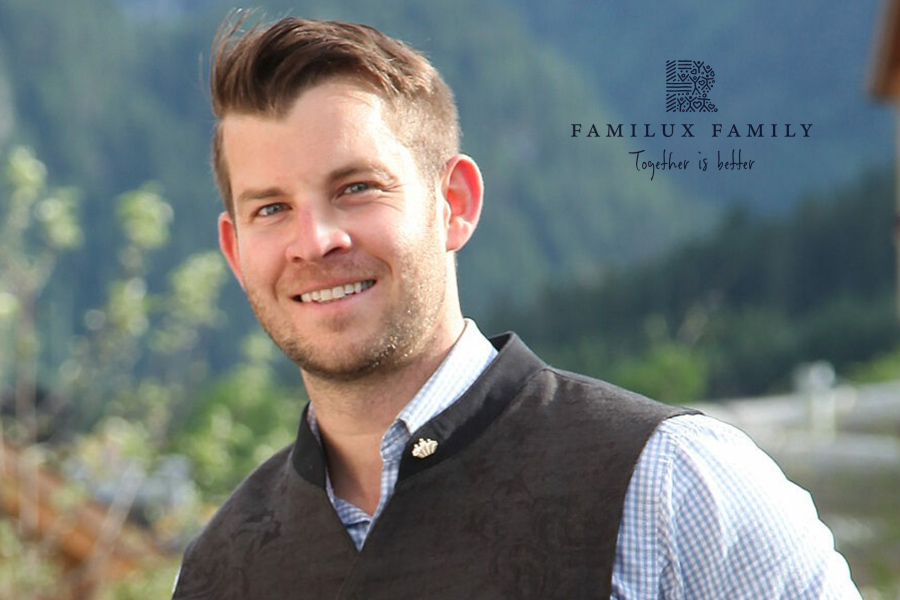
We spoke with Florian Mayer about his experiences with PERSENTIS:
With the FAMILUX Group, you place a strong focus on your employees. Recently, a PERSENTIS analysis was conducted for the second time. Where do you see the advantage and particular benefit?
In 2021, we approached our employees directly with a group-wide survey for the first time. The benefit is obvious to us: with now approx. 750 employees, it is difficult for us at the group level to capture individual opinions and potentially emerging trends. Through the PERSENTIS survey tool, we were now able to give everyone a voice – whether general manager or apprentice. Through this, we received a broad spectrum of opinions from our employees with plenty of praise, but also numerous notes and criticism.
What are your most important insights from the analysis?
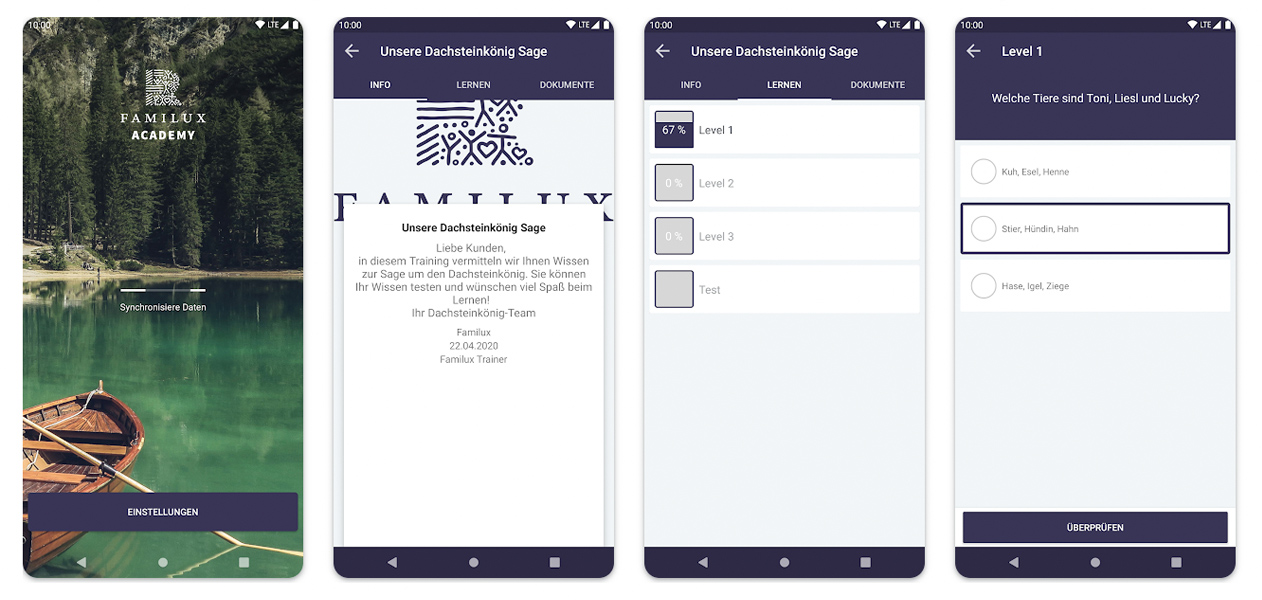
One of the most important insights was and certainly is that our employees confirmed to us that we have done and are doing a lot of things very, very right with our unique FAMILUX employee philosophy. We received tremendous approval for our special benefits as well as for our family-like interactions. However, at least equally important was the analysis of remaining weaknesses, which of course still exist. This allowed us to identify our weak points in leadership and counteract them with immediate measures such as the FAMILUX Academy, the 4-day week, or new recruiting channels, so that we are now in the comfortable position of not having to speak of a staff shortage in any of our houses or – as has become common in many places – having to close sub-areas of the hotels or cap occupancy.
Have you already been able to derive concrete measures from the PERSENTIS results? What has changed?
Immediately after the first PERSENTIS survey, we brought all hotel directors and the owner family to the table and discussed the results in detail. As a result, we redesigned our FAMILUX Academy and launched the Talent Academy, a proprietary leadership training program that is second to none. Here, we train the top 3 talents per hotel in our own academy and give them free access to high-level education, which they can then contribute to leadership positions within the company. We were also able to implement the 4-day week to offer our employees an even better work-life balance.
Can you already pinpoint changes in numbers? Has the fluctuation rate improved, for example?
We also experience natural fluctuation, as is common in the hotel and gastronomy industry. Due to the industry, this can never be completely avoided, and we too struggle with a certain amount of turnover. However, we can certainly determine through the measures we were able to take, partly based on the surveys, that we are looking at stable employee numbers with low fluctuation. As an example, the housekeeping department at our Dachsteinkönig – Familux Resort can be mentioned, where we have not recorded a single resignation for nearly a year, because the combination of a strong department head paired with the FAMILUX philosophy has created a feel-good atmosphere that is second to none. In addition, we were able to open our newest resort in Oberhof in the Thuringian Forest in a structurally rather difficult region with more than 140 employees, with a proportion of local employees of approx. 85%!
Some entrepreneurs shy away from obtaining open feedback from their employees. What would you say to them? What is your experience with this?
Only through open feedback can you reflect on yourself and improve. Fear or hesitation are certainly the wrong advisors here. Anyone who is aware that employees are an entrepreneur's highest asset can only use such tools to their advantage and should not shy away from them.
We would never be where we are now if we hadn't listened attentively to our employees.
And finally, a general question: What can employers in the hotel industry do now to make hosting an attractive career field again?
For me, the key is actually simple. You have to make employees feel that they are just as important, if not more important, than the guest. You have to create a "world" around employees that provides them with optimal conditions. And by that, I don't explicitly mean the financial factor, which naturally remains an important part of an employment relationship. Good work must always be appropriately rewarded. Above all, however, I mean making employees feel "at home" at work. Coming to work gladly and always with the goal that employees identify 100% with the company. Coupled with forward-thinking, innovative ideas, and a digitized work environment, you can still find many motivated people in the hotel industry even in times of skilled labor shortages.