Clear, confident, individual
Many women in leadership roles—or on their way there—sooner or later face the question: How should I lead? Which leadership style suits me, my team, and my industry? And which one fits my self-image as a woman in a leadership role?
Leadership is not a method that you can simply slip on like a suit. It is an expression of your personality and your mindset. That's why it's not enough to memorize theoretical leadership models. They provide guidance, yes. But to lead effectively and authentically, you need something else: your own style.
Leadership models – useful, but not sufficient
In leadership training courses, we encounter terms such as authoritarian, democratic, situational, transformational, and laissez-faire. These models have their merits. However, they fall short when you try to apply them 1:1 to your everyday leadership activities.
Because leadership always works through you as a person. Your attitude, your communication style, your handling of power and emotion—all of this shapes how you are perceived.
Why women are under particular pressure
Women often face a double challenge: they are expected to
- Be assertive, but please don't be bossy.
- Clear, but not too harsh.
- Emotional, but not overly sensitive.
Many adapt before they even have any idea how they really want to lead.
The problem with this is that if you censor yourself before you can even develop a style, your leadership loses its effectiveness and authenticity.
The central question is therefore not:
"Which leadership style is the right one?"
Rather:
"What should my leadership style be like?"
Your own style comes from your personality.
Your leadership style is not only evident in grand speeches or crisis meetings. It is evident in everyday life:
- How you make decisions.
- How you deal with conflicts.
- How you give space or make clear statements.
- Whether you take on responsibility or pass it on.
- Whether you inspire others or merely control them.
Women in particular benefit from consciously incorporating their emotional and intuitive side into their leadership style. This makes their leadership style more empathetic and helps them develop leadership PERSONALITY.
Leadership is a process—not a one-time decision
Developing your leadership style is not a sprint. It's a journey. It's a journey of continuous development. What helps?
- Reflection: What is important to you when working with others?
- Feedback: How do others perceive you as a leader?
- Patience: Leadership requires development and sometimes detours.
- Coaching: Perspectives from neutral professionals can remove obstacles and provide clarity.
Conclusion: Your style is your impact.
Once you have found your leadership style, you will recognize it by the fact that you no longer have to pretend to be someone else. You will become clearer, more confident, and at the same time more engaging. You will become effective because you are true to yourself. And that is what your team will sense.
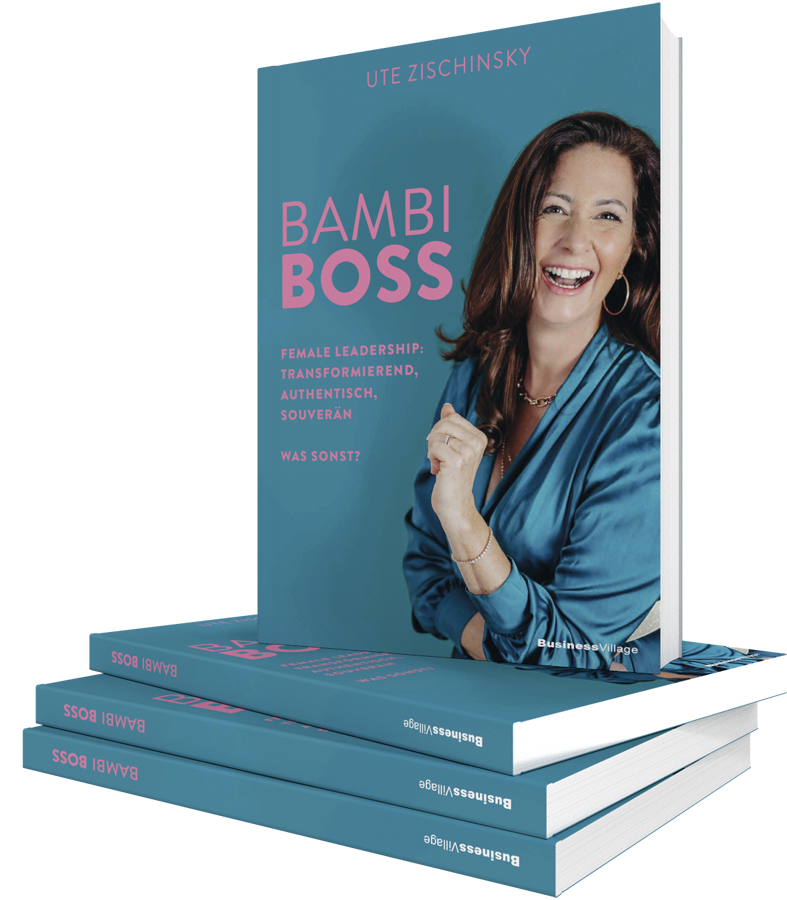
You can read more about this in my book "BAMBI BOSS – Female Leadership: transformative, authentic, confident – what else?"
In it, I devote an entire chapter to the question: How can you find your individual leadership style based on your personality?